SHUNEVKA
The Tragedy
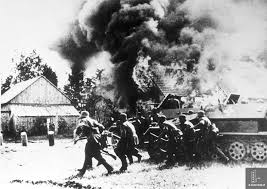
May 22, 1943 – at dawn, during one of the largest punitive operations "Cottbus", Nazi German forces surrounded the village of Shunevka. Shunevka was part of the Borisov-Begoml partisan zone – one of the largest in occupied territory, where partisans constantly struck at German communications. The German command decided to carry out a "cleanup".
All adult residents were herded into a barn and burned alive. Children between the ages of 1 and 6 were cold‑bloodedly thrown into a well by the punishers.
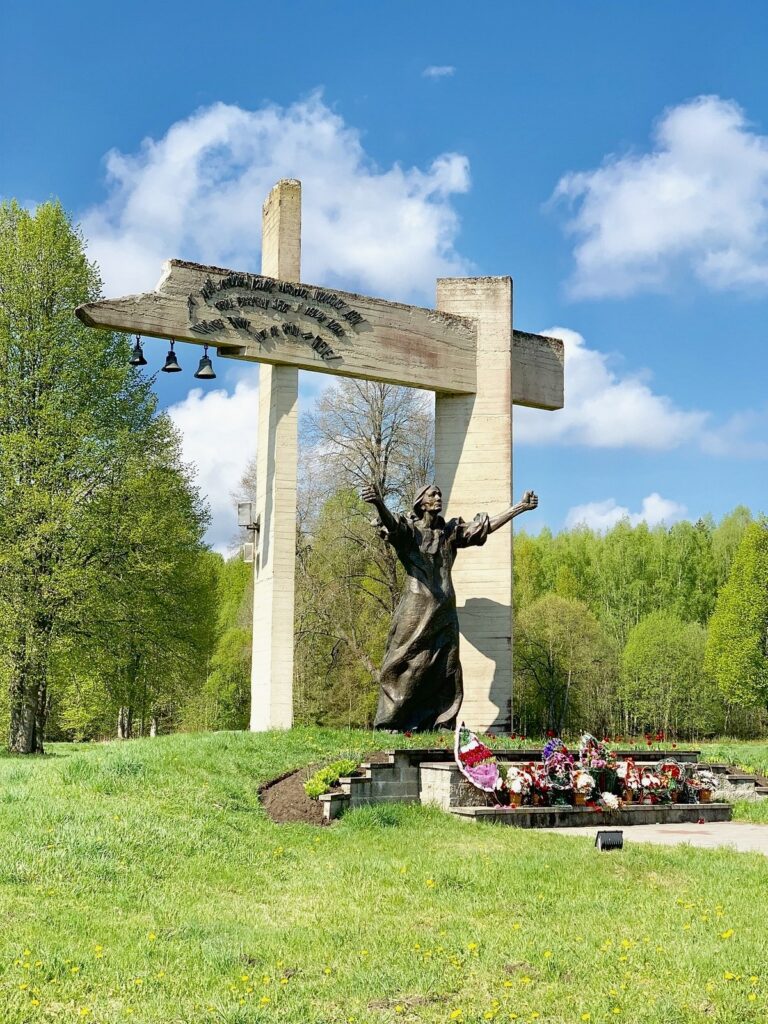
Shunevka · right after the tragedy and today
Life before the war
Before the war, Shunevka was a small, quiet Belarusian village that was part of the Begoml District of Minsk Region. The state border with Poland ran very close, and the road to Begoml went straight through Shunevka.
There stood houses, people lived, children played and laughed. As in any village, people worked, rested, loved, raised children, grew bread with their peasant labor, and hoped for a better life. The war stopped and destroyed everything.
In total, in the Dokshitsy District during the war, more than 20,000 people perished, 97 villages were completely burned, three of them – Shunevka, Azartsy, and Zolotukhi – were burned together with their inhabitants and were never rebuilt.
The children who perished
From the protocols and the memorial plaque, the names of the youngest victims are known:
- Ananich Lyusya – 1 year old
- Ananich Lyuda – 1 year old
- Kirvel Misha – 2 years old
- Ananich Volodya – 2 years old
- Kolyago Volodya – 4 years old
- Rutkovsky Petya – 5 years old
- …and 9 more children whose names are carved on the memorial plaque.
Adult victims
66 adults burned alive in the barn. Their names are immortalized on a granite slab in the center of the memorial complex. On the sites of the burned houses, stone foundations have been erected with bronze tongues of flame, bearing the surnames of the deceased owners.
Survivors (3 people)
- Konstantin Ananich – the only adult witness of the tragedy (has since passed away)
- Sonya (Sofya) Ananich – 6 years old, saved together with her father Konstantin
- Volodya – Sonya's cousin, also 6 years old
Voices of survivors and witnesses
Memory
Memorial Complex "Curse to Fascism" was opened on June 15, 1979, and its final form was completed on July 3, 1983 after the installation of the central monument.
Authors of the complex: architects Yuri Gradov and Leonid Levin, sculptor Anatoly Anikeychik. (These are the same creators of the Khatyn memorial complex.)