ROSITSA
The Tragedy
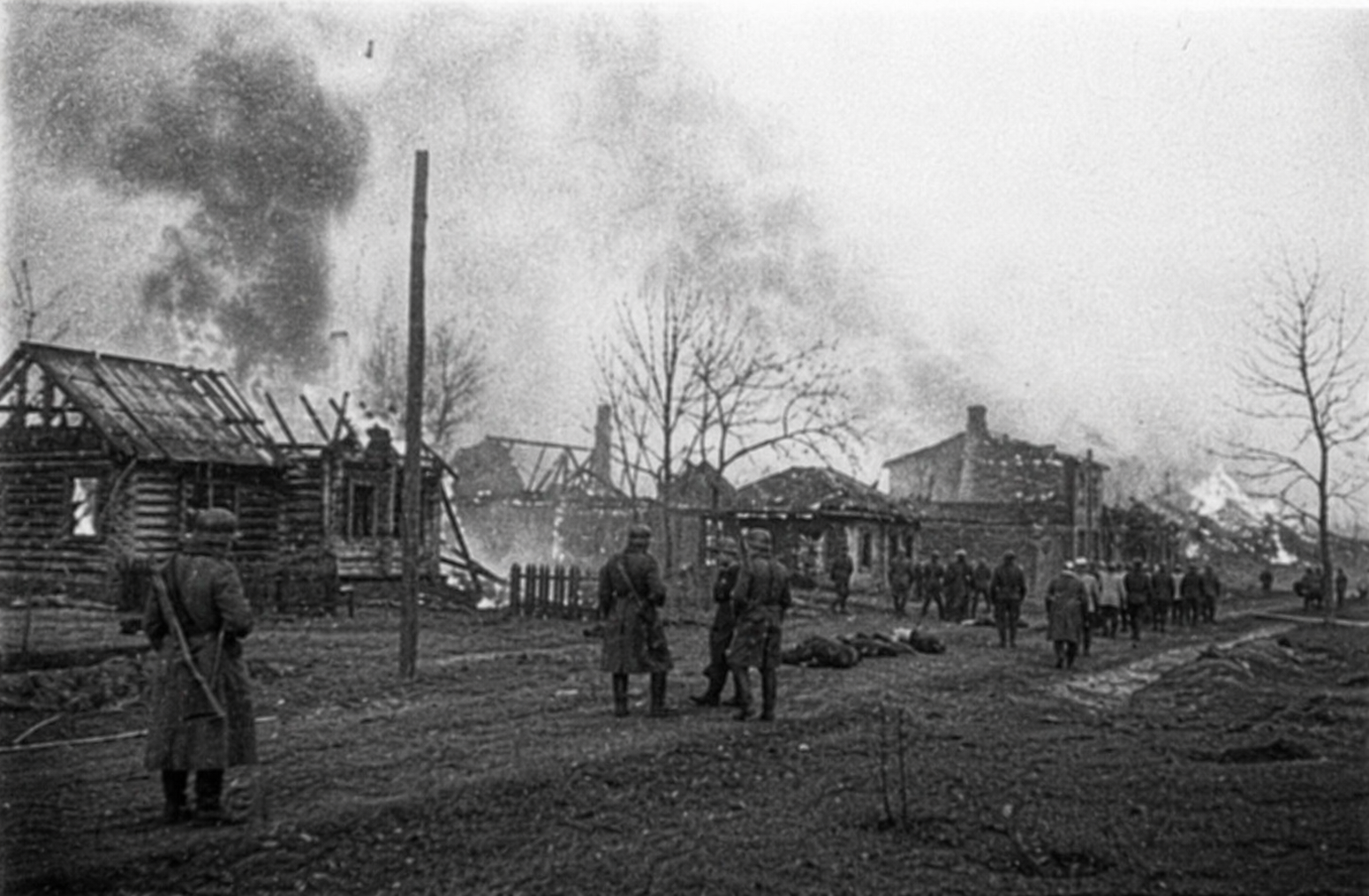
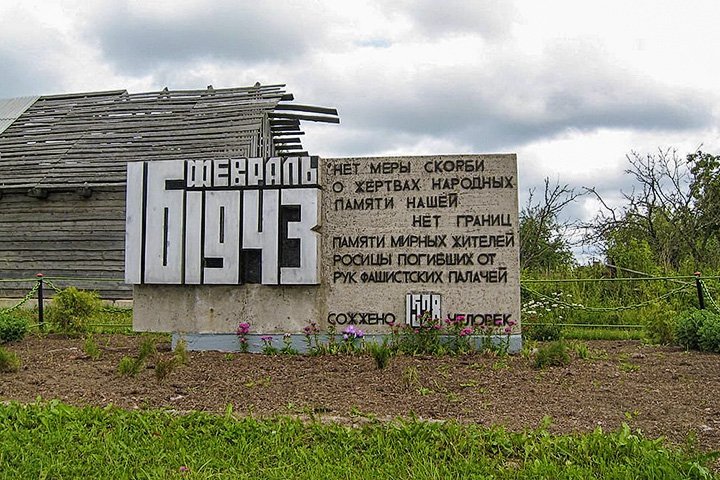
February 16–18, 1943 – During the German punitive operation known as Operation Winterzauber, the village of Rositsa was surrounded by Nazi forces and collaborators. Residents and refugees from nearby settlements were gathered and held under guard for several days, many inside the local church.
After this confinement, the population was divided. Younger and stronger people were deported for forced labor, while the elderly, sick, women, and children were locked in barns and houses which were then set on fire.
Rositsa · then and now
The Village Before
Before the war, Rositsa was a quiet border village with a long religious history. Its Catholic parish dated back to the 16th century, and the Church of the Holy Trinity stood at its center as both a spiritual and community hub.
During the war, as front lines shifted and punitive actions intensified, villagers from surrounding areas sought refuge there, unknowingly gathering in a place that would soon become a target.
Names of the victims
Many of the dead remain unidentified. Entire families perished together, and records were lost in the destruction.
Among those remembered are two priests who chose to stay with the people:
Refused to leave his parishioners and was burned alive with them.
Also remained voluntarily and died alongside the villagers.
Both were later recognized as martyrs for their sacrifice.
Voices of the witnesses
Why It Happened
Rositsa was destroyed as part of a broader anti-partisan campaign. The German command sought to eliminate support for Soviet partisans by targeting entire civilian populations.
Operation Winterzauber resulted in the destruction of hundreds of villages across Belarus, where inhabitants were often killed or deported as collective punishment.
Memory
Unlike many “dead villages” that disappeared completely, Rositsa exists today as a place of memory. Pilgrims come each year to honor the victims, and the church stands as a reminder of both faith and tragedy.
The story of Rositsa is one of hundreds in Belarus — villages erased not by chance, but by deliberate policy, leaving behind silence, ashes, and names that are still being recovered.