GLUKHOYE PERKHUROVO
Location
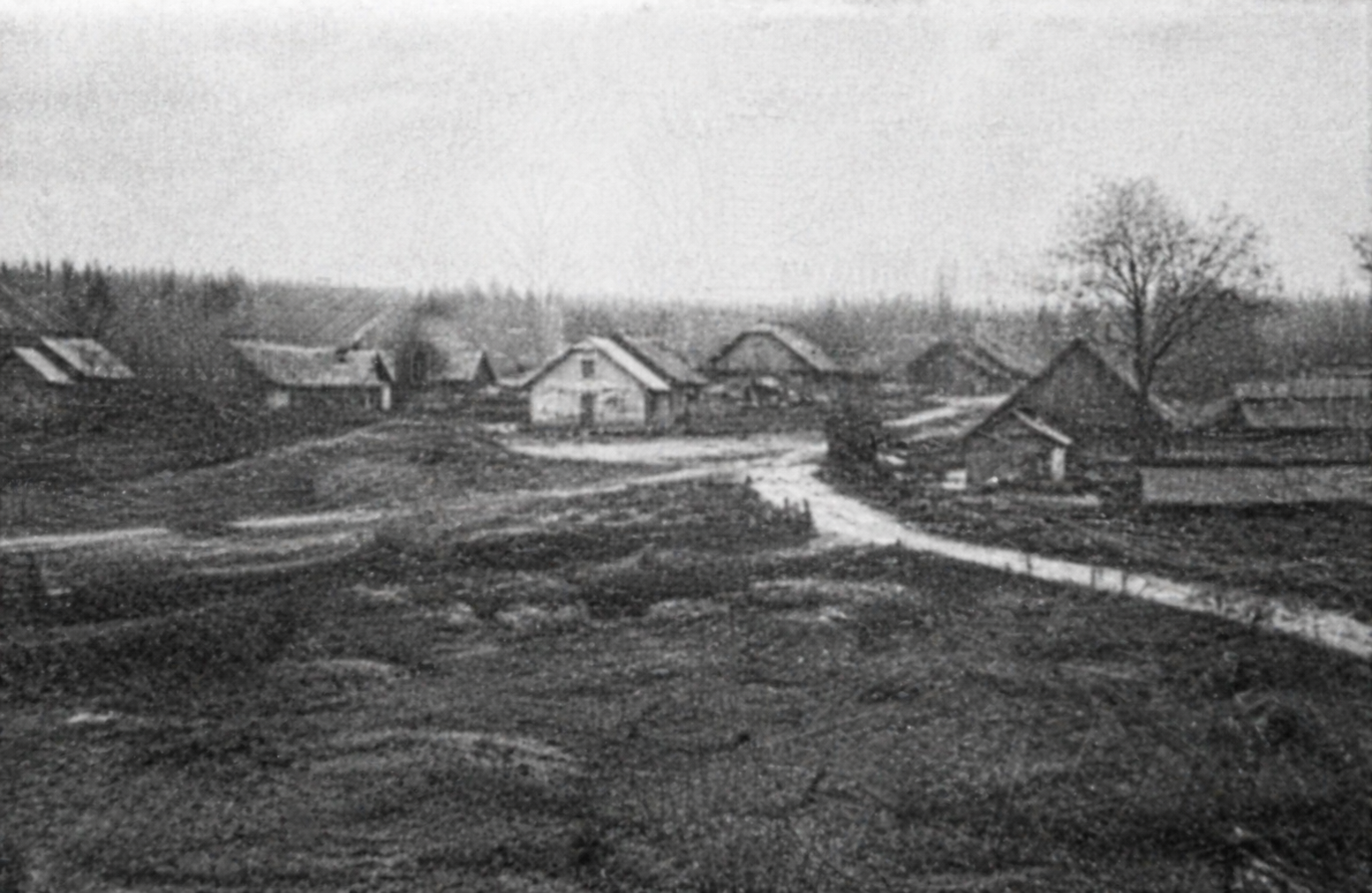
The village was located 1.5 km west of the village of Frunze, 33 km from Minsk and 27 km from Dzerzhinsk, in a forested area. First mentioned in the early 16th century. The lands belonged to the Radziwills, and in 1860 to landowner Wagner.
The Tragedy
January 30, 1943 – A punitive detachment from the Dirlewanger SS police battalion stormed the village from two sides.
Several days before the massacre, partisans had shot a small German group 3 km from the village. A German non-commissioned officer and one soldier were killed, three were wounded. The partisans suffered no losses and retreated into the forest.
On the morning of January 30, the punishers surrounded the village. They broke into houses immediately after throwing grenades through windows and doors. Survivors were mowed down with machine guns. The occupiers searched attics, basements, sheds, and under stoves. All livestock – cows, horses, pigs, dogs, even cats – were destroyed.
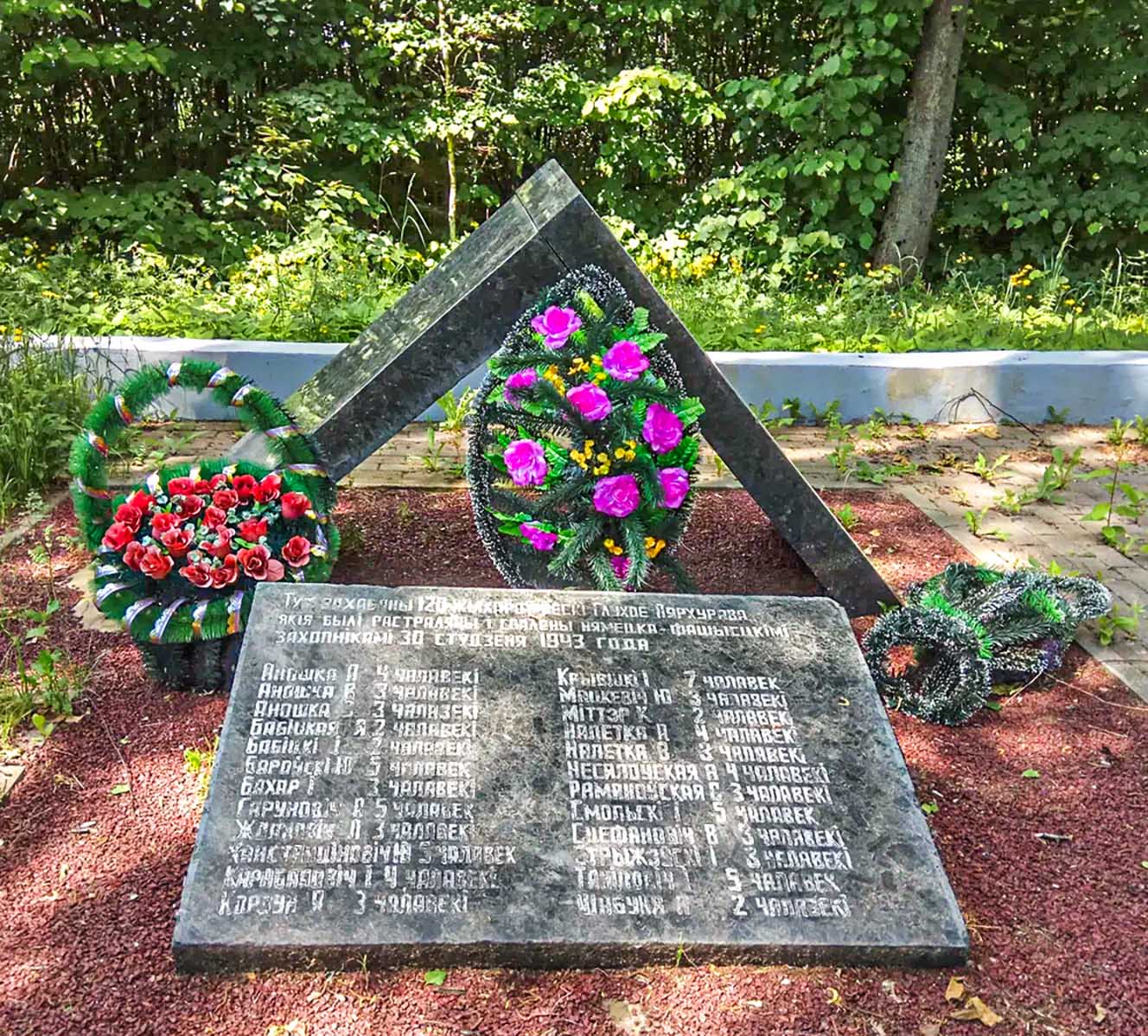
Glukhoye Perkhurovo · then and now
Victims
Out of 120 shot civilians, the names of 39 people remain unidentified.
Voices of the survivors
Additional atrocity
Ukrainian policemen combed every house, every cellar, every attic, every shed multiple times. After searching the yards, the police burned all 32 residential buildings, outbuildings, and cellars. Together with the houses and buildings, the bodies of the murdered villagers burned.
A few days later, relatives of the dead residents and partisans from the Stalin and Dzerzhinsky brigades came to the ashes. The remains of the dead were collected and buried.
Memory
In 1957, a memorial plaque was installed on the site of the burned village with the inscription: "Here on January 30, 1943, the German occupiers killed 120 civilians from the village of Glukhoye Perkhurovo." An obelisk was erected over the grave of the victims of fascism. Out of 120 shot, the names of 39 people remain unidentified. The village is immortalized in the Khatyn memorial complex.