DALVA
The Tragedy
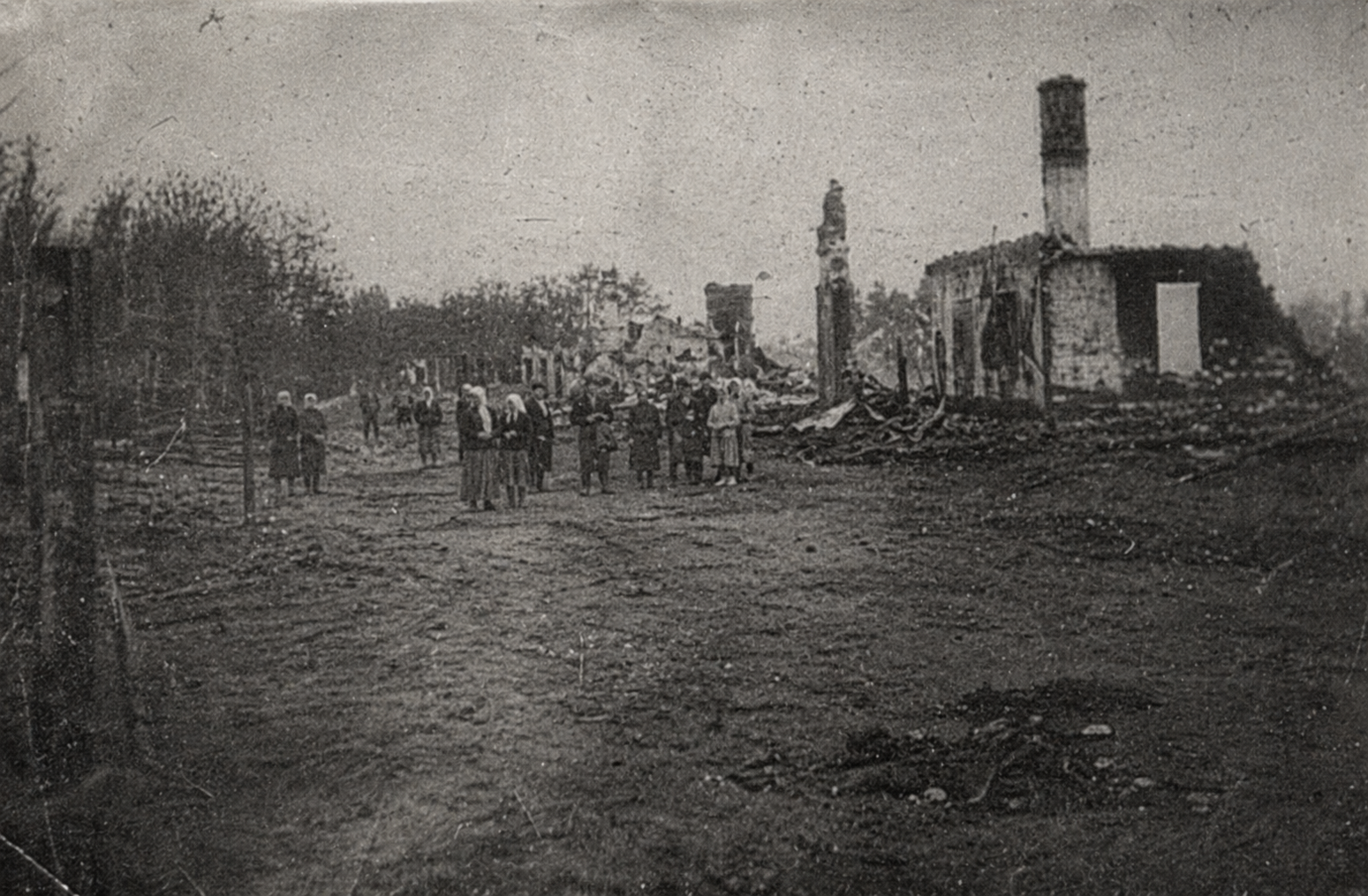
June 19, 1944 – Just days before the liberation of Belarus, a German punitive detachment surrounded the village of Dalva. The residents were gathered and driven into a barn. The building was set on fire, and those trapped inside were burned alive.
Dalva became one of the last Belarusian villages destroyed in the war — its people killed only ten days before the arrival of Soviet troops.
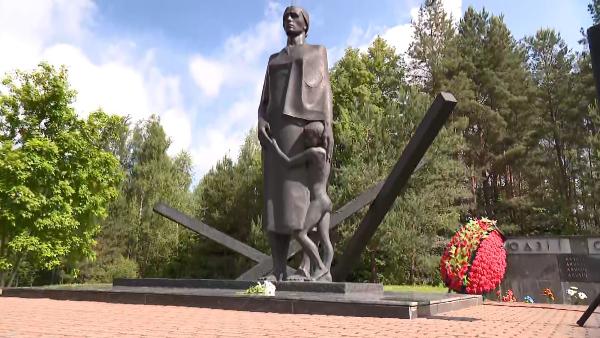
Dalva · right after the tragedy and today
The village before
Before the war, Dalva was a small rural settlement surrounded by forests and fields. Life there was simple — families worked the land, raised children, and lived in wooden houses along a single village street.
Like many Belarusian villages, it had no strategic importance. Its destruction was not due to battle, but as part of a broader policy of terror against civilians.
Names of the victims
The names of the villagers are preserved on a memorial wall built after the war. Many of those killed were from the same families — parents and children who died together in the fire.
- Commemorated by three black beams rising from the ground, representing the flames in which they perished.
Voices of the survivor
Nikolai Girilovich had been grazing horses away from the village. When he returned, Dalva no longer existed — only ashes, burned houses, and the remains of its people. He later dedicated his life to preserving the memory of the village and its inhabitants, helping to create the memorial that stands there today.
Why it happened
Dalva was destroyed as part of Nazi anti-partisan operations. Villages suspected of aiding or simply existing near partisan activity were often wiped out completely, their populations killed as a warning to others.
Belarus suffered heavily under this policy — thousands of villages were burned, many together with their inhabitants.
Memory
Dalva was never rebuilt.
In 1973, a memorial complex was created on the site of the former village. It follows the layout of the old street: where houses once stood, symbolic structures and everyday objects — like a child’s toy or a jug — mark the places where people lived.
At the center stands a sculpture of a grieving mother and child, surrounded by silence.