BORKI
The Tragedy
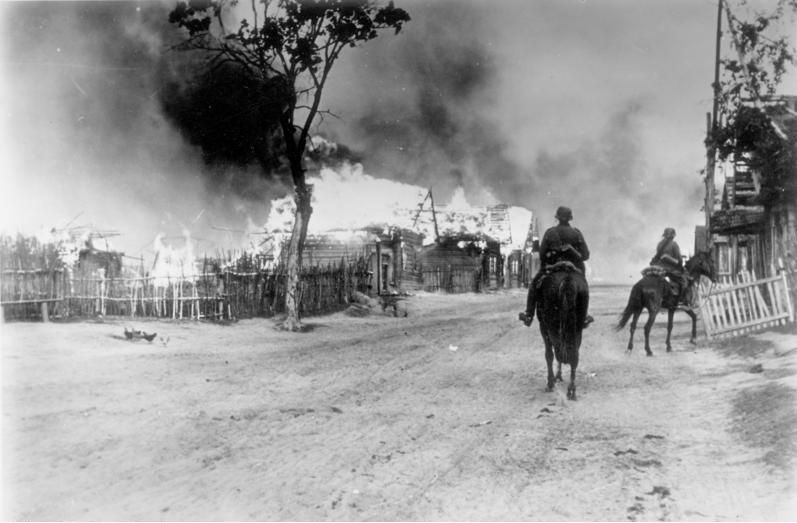
June 15, 1942 – A special SS unit under the command of SS-Sturmbannführer Oskar Dirlewanger, supported by collaborators, the 8th Einsatzkommando, and a platoon of the 51st Reserve Police Battalion, surrounded the village of Borki and six adjacent settlements.
Residents were herded into one place, shot, and burned alive. Small children were thrown into wells by the punishers.
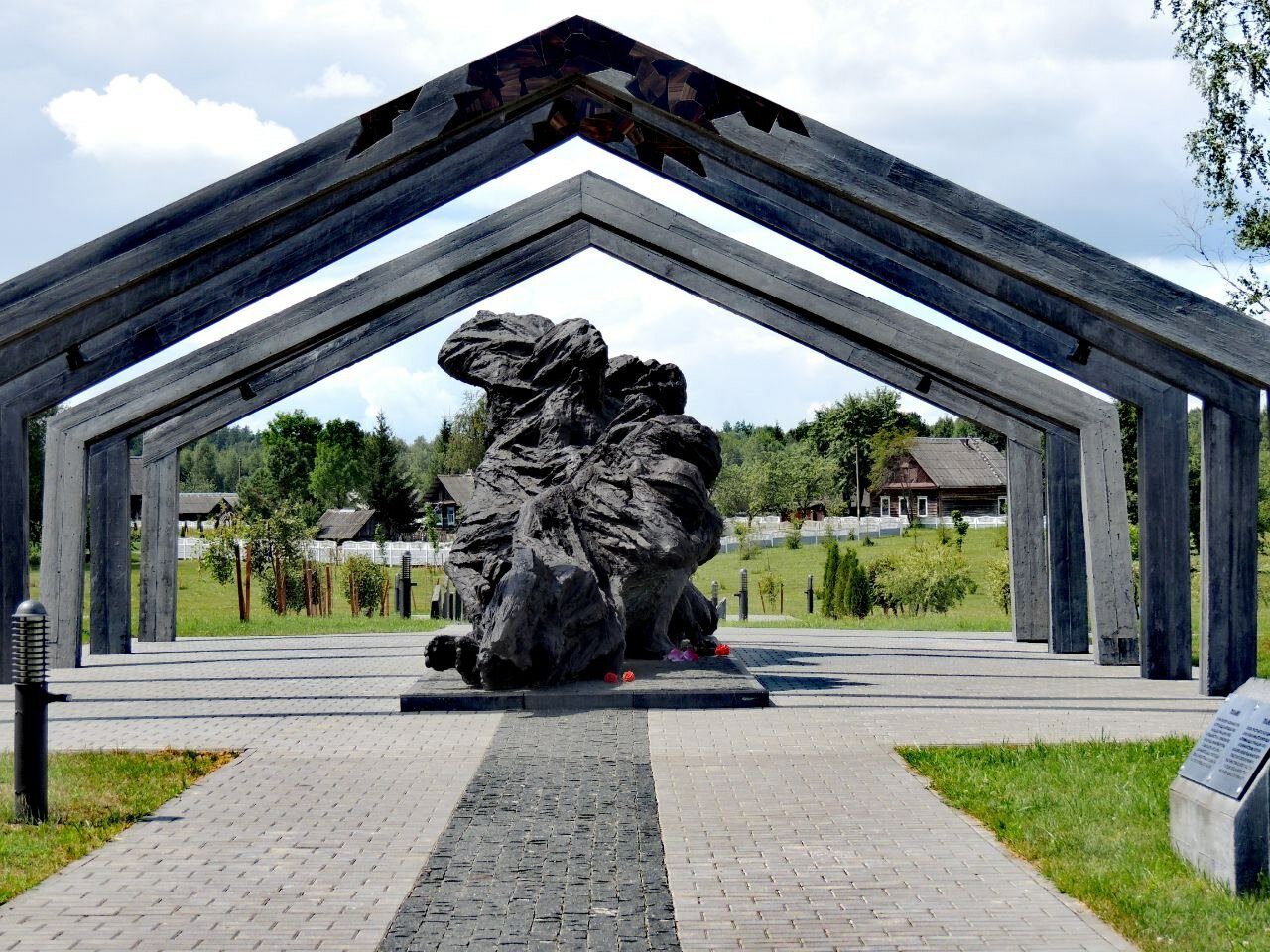
Borki · right after the tragedy and today
Victims and survivors
Before the war, Borki had about 300 households. Six neighboring settlements disappeared forever from the map of Belarus: Zakrinichye, Khvatovka, Dzerzhinsky, Proletarsky, Krasny Pakhar, Dolgoye Pole.
- Kozlovsky · Markevich · Putrenkov · Yarmolyuk · Kuropatkin · Khomuk · and others
Faina Anasovich (Kuchka) – she was 12 years old when the fascists burned her village. She remained the only survivor among all residents.
Inna Leonidovna Putrenkova (born around the time of the tragedy): "Locals said that several people managed to escape thanks to a boy who ran to Khonovo from a neighboring village and told what the punishers were doing there. The villagers, including my mother, ran to the swamp. They sat up to their necks in mud, waiting for the Germans to leave."
Olga Konstantinovna Voronchukova (born 1937): "Mother baked bread for the partisans, father repaired their shoes. The children were hungry, but we understood: they needed it more. In childhood, we ate frozen and rotten potatoes. The police came – they took everything from the house. Our family survived by a miracle: we hid from the fascists in the swamps."
Voices of witnesses
Dirlewanger's report
Oskar Dirlewanger's report from June 16, 1942, has been preserved, in which he lists the number of victims and methods of killing with German pedantry:
"Yesterday's operation against Borki took place without enemy contact. The settlement was immediately surrounded and captured. Local residents who tried to flee were shot, three of them carrying weapons. The search established that the village was partisan. There were almost no men, few horses, and carts. Residents were shot, the settlement burned. Residents shot – 1,112, plus liquidated by SD – 633. Total: 1,745. Shot while trying to escape – 282. Grand total: 2,027"
Why it happened
A few days before the tragedy, partisans carried out a successful operation that resulted in the destruction of several dozen German pilots. Dirlewanger was ordered to conduct an "intimidation action" in response to partisan activities. His goal was not only to punish a specific village but to terrorize the entire local population and deprive the partisans of support.
Memory
The Memorial Complex "In Memory of Burned Villages of Mogilev Region" was opened in the village of Borki after reconstruction in 2020. President of Belarus Alexander Lukashenko attended the opening ceremony.